


HDPE Sheet: Types, Uses and How to Order Cut to Size
Learn what HDPE sheet is, the grades and finishes available, where it's used and how to order it cut to size online from Plastic Online, delivered Australia-wide.
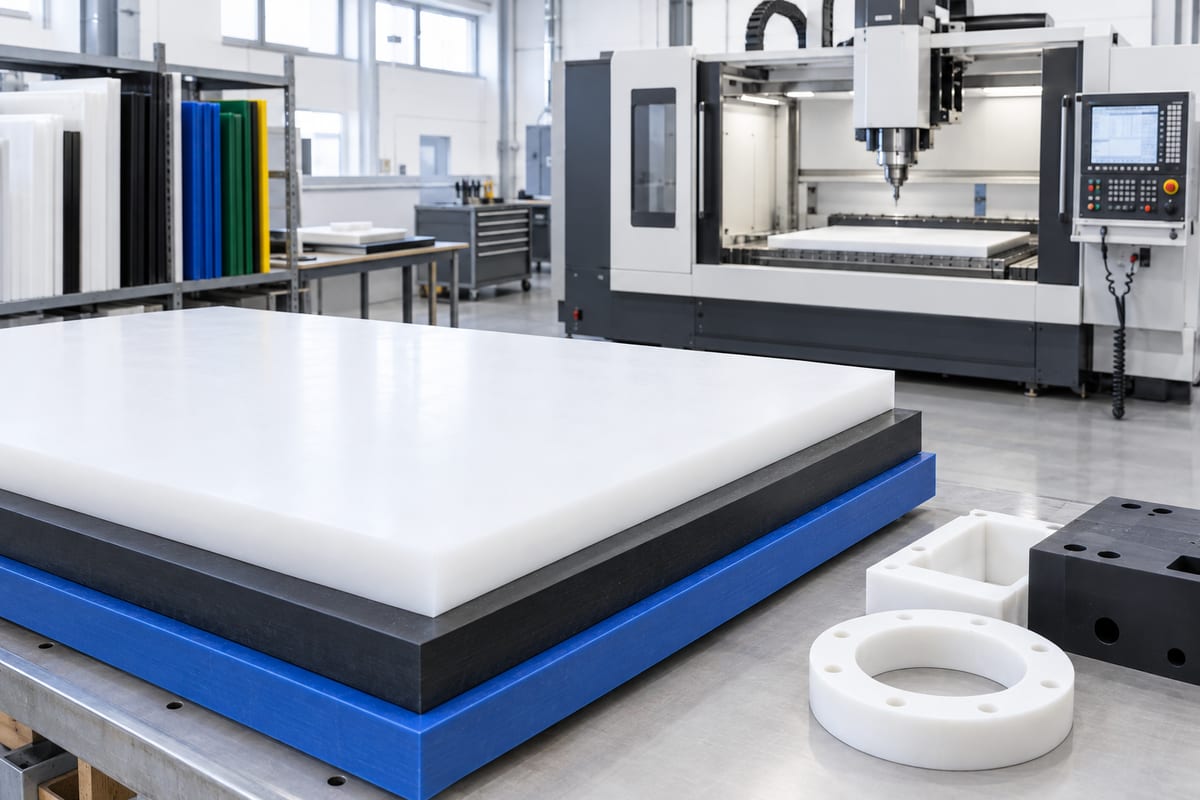
If you've ever handled a chopping board, a boat fender plate or a heavy-duty tank liner, you've probably handled HDPE. High-density polyethylene is one of the most useful sheet plastics going: tough, light, chemical resistant and easy to work with standard workshop tools. This guide explains what an HDPE sheet is, the options you'll come across, where it earns its keep and how to order it cut to size from Plastic Online.
What is HDPE sheet?
HDPE stands for high-density polyethylene, a thermoplastic made from ethylene. In sheet form it's a semi-rigid, slightly waxy material that doesn't absorb water, resists most acids, alkalis and solvents, and keeps its toughness even at low temperatures. Its density is just under that of water, so it floats, which is one reason it's so popular in marine work.
The trade-offs are worth knowing up front. HDPE is softer and less stiff than acrylic or polycarbonate, it expands and contracts noticeably with temperature, and it can't be solvent-cemented like acrylic. If you need optical clarity or high rigidity, look elsewhere. If you need a durable, low-maintenance workhorse, HDPE is hard to beat.
HDPE sheet options to consider
Not all HDPE sheet is the same. When you browse the HDPE sheet range , these are the main variables to compare. Exact sizes, thicknesses and colours vary by product, so check each product page for what's offered.
General-purpose and food-safe grades
Natural (off-white) and coloured HDPE is the standard choice for cutting boards, food-prep surfaces, machine guards and general fabrication. Colour-coded sheet is common in kitchens and food processing, where different colours separate different food types.
Marine-grade and UV-stabilised sheet
Boats, jetties and outdoor installations need a material that copes with sun, salt and constant moisture. A product like Seaboard HDPE Marine Grade is made for that environment, and it won't rot, rust or swell the way timber and metal can. Unstabilised sheet left in Australian sun will eventually chalk and become brittle, so match the grade to the exposure.
Surface finish and thickness
Sheets can have a smooth or textured face. Textured surfaces help hide scuffs and give grip, which suits marine and playground applications. Thickness depends on the job: thinner sheet works for liners and covers, while thick sheet is used for structural parts, cutting boards and machined components.
Where HDPE sheet is used
Because it's so versatile, HDPE shows up across trade and DIY work:
Marine: kick plates, hatch and locker components, fender boards, dock furniture and protective panels.
Food and hospitality: cutting boards, benchtop protectors and preparation surfaces that tolerate repeated washing.
Industrial: tank components, chemical-resistant liners, conveyor wear strips, guides and spacers.
Outdoor and recreation: playground panels, garden furniture, planter boxes and weather-resistant partitions.
Workshops and vehicles: bench protection, jigs and templates, and lightweight, non-corroding fit-out panels.
Working with HDPE sheet
HDPE machines well with standard woodworking and plastics tooling. Use sharp cutters and keep feed rates steady so the material cuts rather than melts. For complex shapes, holes and slots, CNC routing gives clean, repeatable edges.
Joining is where HDPE differs from other plastics. Because adhesives don't grip it, use mechanical fasteners or plastic welding , which fuses the material with a matching filler rod for a strong, watertight joint. If you're fixing sheet outdoors, drill oversize or slotted holes so it can expand and contract with the temperature without buckling.
HDPE or UHMWPE?
If your application involves constant sliding, abrasion or heavy impact, such as chute liners or bulk-handling wear plates, consider UHMWPE sheet instead. It's a higher-molecular-weight polyethylene with outstanding wear resistance. For most general fabrication, marine and food-prep jobs, HDPE is easier to work and the more practical option.
How to order HDPE sheet from Plastic Online
Plastic Online is run by Holland Plastics from Molendinar on the Gold Coast, and ordering is built around live online pricing. Pick the HDPE product that suits your environment, enter the dimensions you need, and the price updates as you go. Orders are delivered Australia-wide, for trade and DIY customers alike.
Before you order, confirm the grade (food-safe, marine or general), measure the finished size allowing for any fixing clearances, and think about expansion if the sheet will live outdoors. Not sure which grade or thickness suits the job? Our team can help if you get in touch with your application details.
Ready to start your project? Choose your HDPE sheet, enter your sizes and get an instant cut-to-size price from Plastic Online, with delivery Australia-wide.