


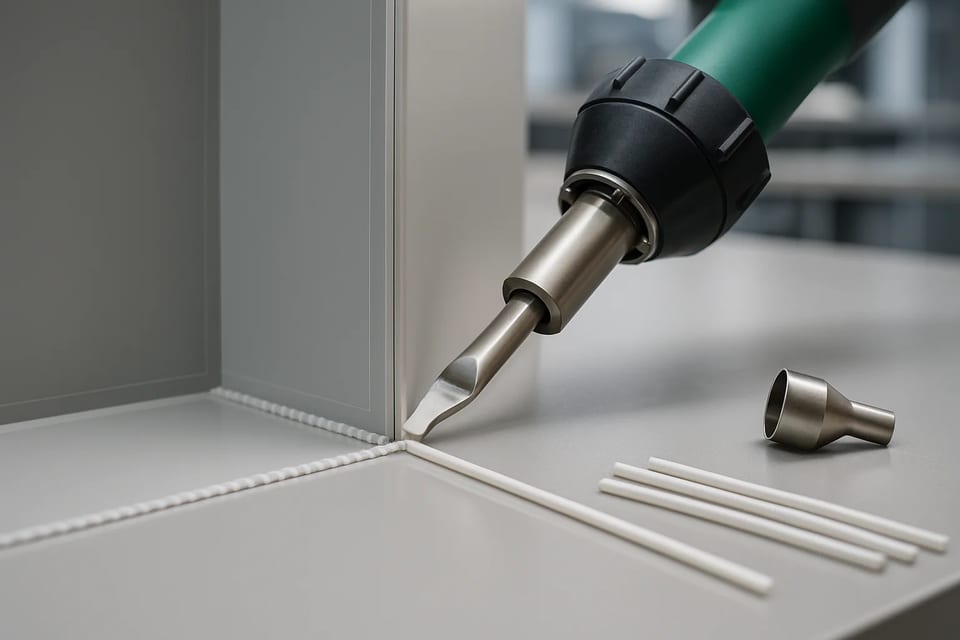
Plastic Welding
Welded plastic fabrication in HDPE, polypropylene, PVC and PVDF — tanks, bunds, ducting and repairs, made in our Gold Coast workshop.
Expert Estimation Services
Upload your technical drawings (DXF, PDF, or STEP) for a comprehensive quote within 4 business hours.
Engineering Review
Every drawing is audited by our senior engineers for manufacturability and cost-efficiency.
Australia-Wide Shipping
Secure, tracked logistics for precision components delivered across Australia.
Precision Machining
CNC routing and laser cutting on the workshop floor, with nesting software and vector file support to keep waste and turnaround down.
Technical Material Library
Specialised polymers for industrial, chemical, and retail applications.
Precision Workflow
Our quality assurance pipeline ensures every component meets your exact engineering requirements.
Technical Audit
Our engineers review your files for structural integrity and yield optimisation.
Precision Machining
CNC routing or laser cutting using automated nesting to minimise material waste.
Post-Processing
Precision folding, edge and flame polishing, and secondary assembly as per specs.
Quality Control
Final dimensional inspection against your CAD drawing before dispatch.
Engineering Standards & Fabrication Capabilities
Joining plastics that glue will not hold
Acrylic and polycarbonate can be solvent bonded. The polyolefins — HDPE and polypropylene — cannot: nothing sticks to them reliably, which is exactly why they are used for chemical service in the first place. Those materials are joined by welding, fusing the parent material so the joint is the same plastic as the parts either side of it.
That is what makes welded fabrication the right answer for anything holding liquid or handling fumes. A bonded seam is a different material with different chemical resistance; a welded seam is not.
What we weld
Tanks, bunds and containment. Ducting and extraction. Fabricated enclosures and covers. Baffles, lids and flanges welded into an existing vessel. Repairs and modifications where a tank or duct is worth saving rather than replacing.
Sending us the job
A drawing is ideal, but a dimensioned sketch is enough to quote from. Tell us what the part will hold or be exposed to — the chemical, the concentration and the temperature — because that drives the material choice more than anything else, and it is the question we would ask first anyway.
How we quote it
Send a drawing, a DXF, a sketch or the part itself. We quote the finished job — material, machining, finishing and freight — rather than a rate you have to assemble yourself, and we confirm the critical dimensions and tolerances against your drawing before anything is cut.
Everything happens in our Gold Coast workshop: cutting, machining, forming and welding on one floor, so a job does not move between suppliers to get finished. Completed work ships Australia-wide from the capital-city depot nearest you.
Why Choose This Service
Materials We Process
Capabilities
Plastic Welding FAQ
Why weld instead of glue?
Can you repair an existing tank or duct?
What material should my tank be?
Products we process
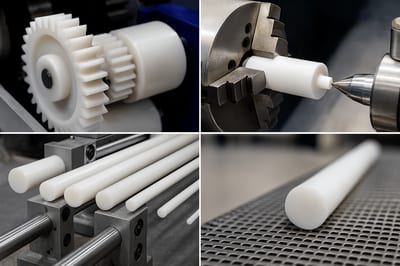
Engineering Plastics
UHMWPE Rod (Natural, Black, Green & Blue)

PVC
PVC-GLAS Transparent Clear Sheet
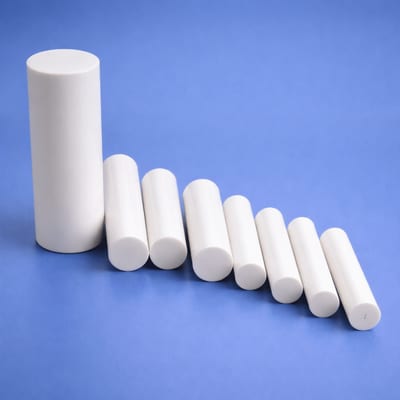
Engineering Plastics
PTFE (Teflon) Virgin Rod
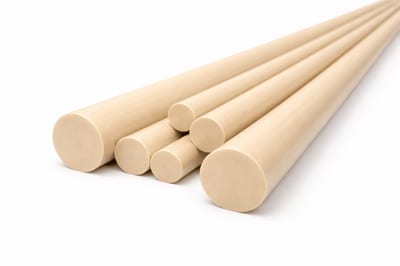
Engineering Plastics
Polypropylene (PP) Rod
Engineering Plastics
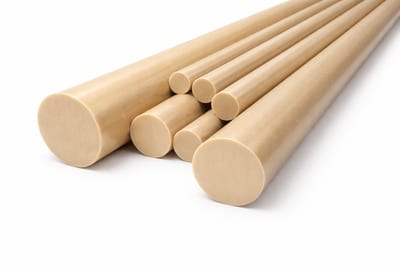
PEEK (Polyether Ether Ketone) Rods
Engineering Plastics
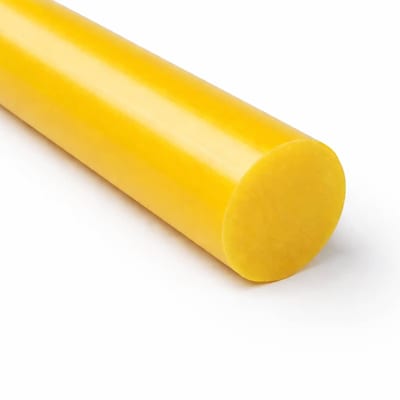
Yellow LFX Nylon Rod (Oil Filled)
Engineering Plastics
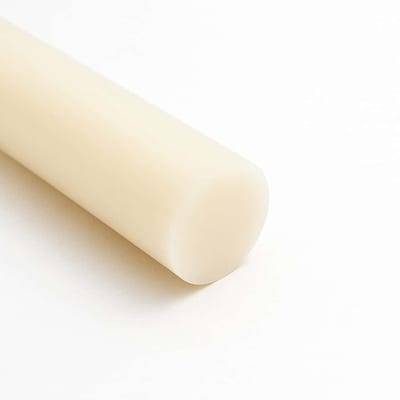
Nylon Rod (Natural)
Engineering Plastics
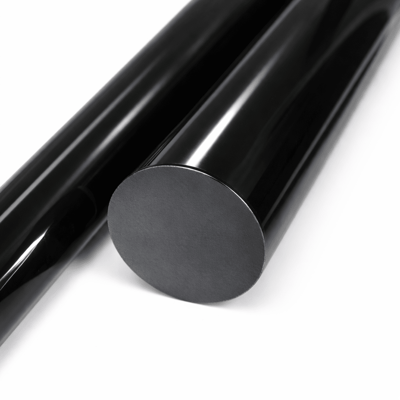
Nylatron GSM Nylon Rod (Black)
Related Services
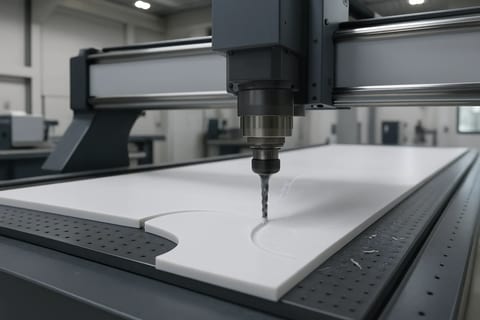
CNC Router Services
Behind Plastic Online sits Holland Plastics, a professional plastics fabrication shop on the Gold Coast.
Learn more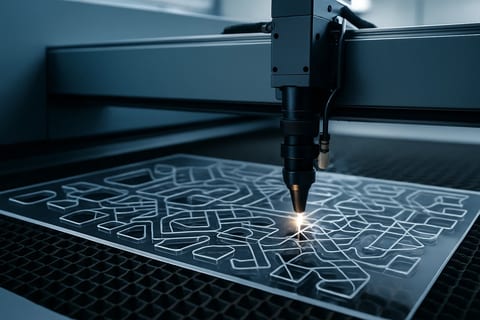
Laser Cutting Services
Backed by a Real-Workshop: Plastic Online & Holland Plastics When you work with Plastic Online, you’re connected to the full-service fabrication expertise of Holland Plastics on the Gold Coast.
Learn more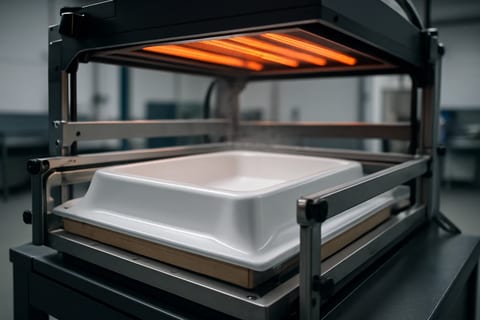
Vacuum Forming
Plastic Online is supported by Holland Plastics, a full-service fabrication shop on the Gold Coast equipped for vacuum forming, trimming, and plastic fabrication.
Learn moreReady to start your project?
Join thousands of businesses across Australia who trust Plastic Online for precision plastic fabrication.