


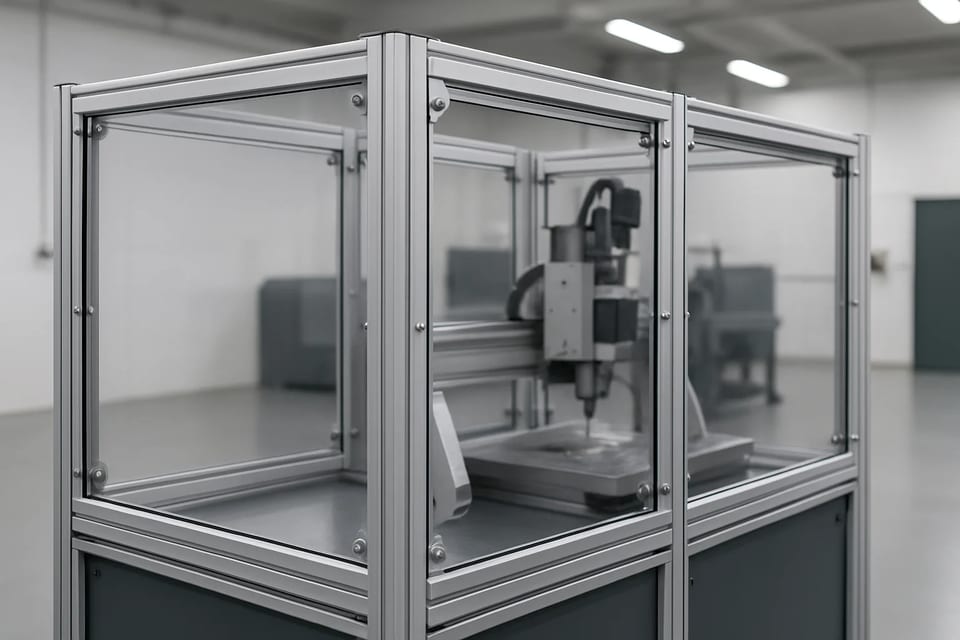
Protective Barriers
Machine guards and safety barriers in clear acrylic and polycarbonate, cut to the opening you actually have.
4.8 / 5
Google Rating
24hr
Quote Turnaround
Australia Wide
Delivery
Start Your Project
Partner with Australia's leading acrylic fabrication experts. We provide end-to-end support from material selection to final delivery.
Material Consultation
Our engineers help you select the optimal grade for your specific environmental and aesthetic requirements.
CAD Support
Send us your designs in DXF, DWG, or PDF. We review every file for structural integrity and precision cutting paths.
Fast Quoting
Receive a comprehensive technical specification and competitive quote within 24 hours of your submission.
Guarding you can see through
A guard that blocks the view gets removed. Clear polycarbonate and acrylic panels let an operator watch the process while keeping hands, swarf and spray on the correct side of the barrier — which is the difference between a guard that stays fitted and one that ends up leaning against the wall.
Polycarbonate is usually the right call
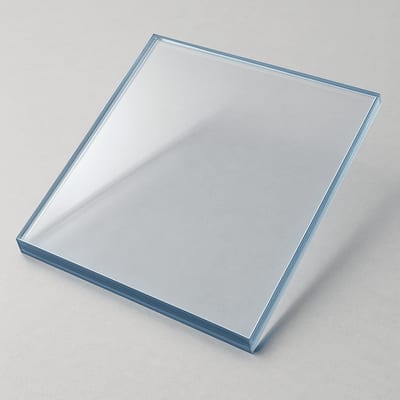
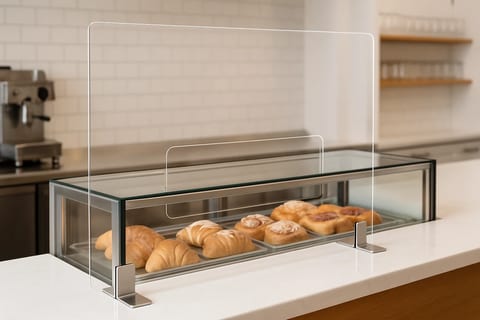
For machine guarding, polycarbonate is the default: it is far more impact resistant than acrylic and deforms rather than shattering. Acrylic suits barriers where clarity and edge finish matter more than impact — separation screens, viewing panels, splash guards away from ejecta.
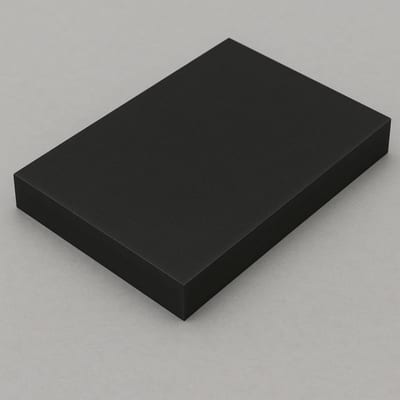
Where the panel is in a wear position rather than a viewing one, UHMWPE is worth asking about. It is opaque, but its abrasion resistance is why chute and hopper liners are made from it.
Cut to the opening, with the holes in it
- Panels cut to the frame opening from your measurements, not trimmed down from a stock size.
- Fixing holes, slots and cut-outs for shafts, conduit and controls, cut with the panel.
- Radiused corners where the panel sits in a hand-access zone.
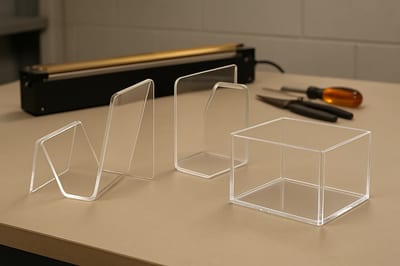
- Folded and bonded assemblies where the guard is not flat — same workshop, no second supplier.
What this page does not do
We supply panels to your specification. Machine guarding is a risk-assessment and compliance matter under Australian WHS law and the relevant Standards, and whether a given panel is adequate depends on the machine, the hazard and the assessment — that is the duty-holder's call, made with your safety adviser or engineer. Send us the specification and we will cut to it exactly.
Cut and finished in our own workshop
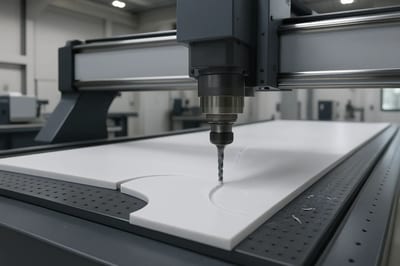
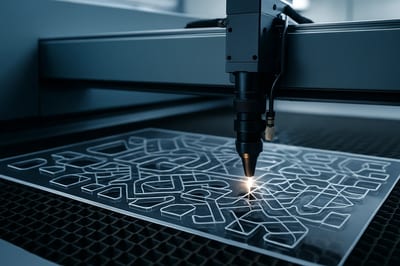
Plastic Online is the online counter of Holland Plastics, a Gold Coast fabrication workshop. CNC routing, laser cutting, vacuum forming and plastic welding all happen on one floor, so the person cutting your part can read what you wrote rather than a summary of it.
We cut to ±0.1 mm. Tell us which dimensions are critical — and whether the tolerance has to hold across a stack of parts — and we will confirm that against your drawing at quote stage. A sawn panel, a routed profile and a laser-cut edge come off three different machines, so naming the critical dimension is worth more than assuming it.
Finished parts ship Australia-wide from the capital-city depot nearest you, not always from Queensland. There is no minimum order: one panel is a job.
Featured Products
Products commonly used for this application.
Services Involved
Our services relevant to this use case.
Need help with your protective barriers project?
Our engineers provide expert guidance on material selection, design optimisation, and fabrication.
Protective Barriers FAQ
Does a clear guard meet the Standard?
Polycarbonate or acrylic for a machine guard?
Can you cut cut-outs for shafts and controls?
More in Safety, Protection & Compliance
Ready to start your protective barriers project?
Join thousands of businesses across Australia who trust Plastic Online for precision-cut industrial plastics.