


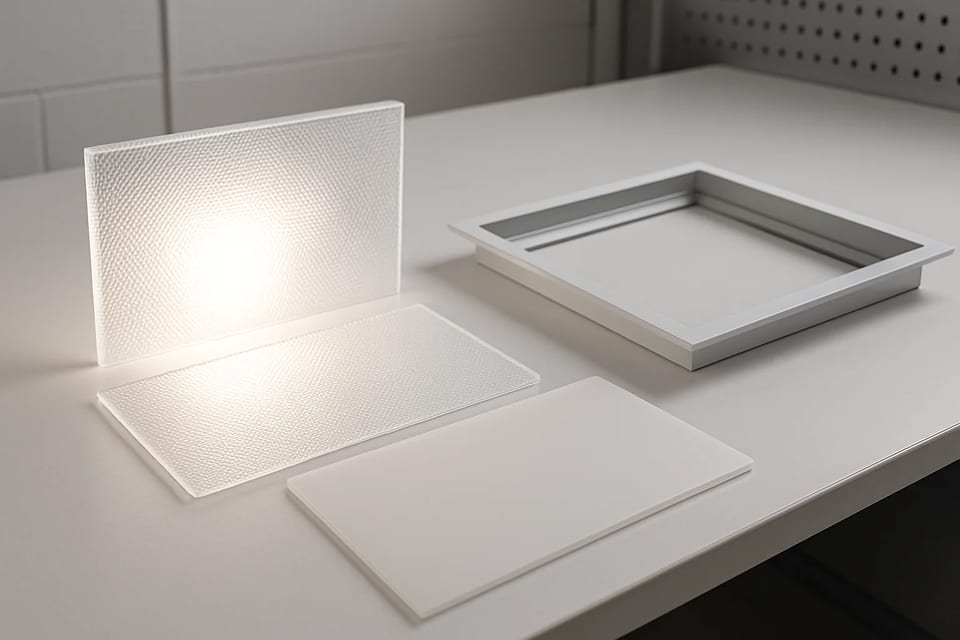
Light Diffuser Panels Cut to Size
Prismatic, egg crate and opal light diffuser panels cut to size to replace yellowed or broken diffusers in fluorescent and LED troffers.
4.8 / 5
Google Rating
24hr
Quote Turnaround
Australia Wide
Delivery
Start Your Project
Partner with Australia's leading acrylic fabrication experts. We provide end-to-end support from material selection to final delivery.
Material Consultation
Our engineers help you select the optimal grade for your specific environmental and aesthetic requirements.
CAD Support
Send us your designs in DXF, DWG, or PDF. We review every file for structural integrity and precision cutting paths.
Fast Quoting
Receive a comprehensive technical specification and competitive quote within 24 hours of your submission.
The diffuser is the plastic panel that sits under a ceiling light and spreads the light out so you are not staring at the tubes or LEDs. In offices, shops, kitchens and garages these panels crack when they are dropped during a tube change, go yellow and brittle with age, or simply disappear during a renovation. We cut replacement diffuser panels to size, so you can fix a fitting without replacing the whole light.
Three kinds of diffuser
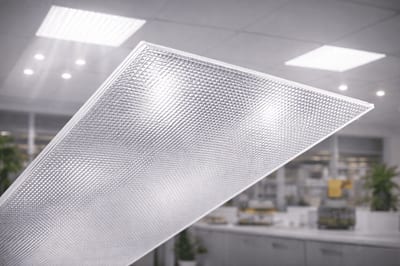
Prismatic
Prismatic light diffuser is the clear acrylic panel with a pattern of small pyramids on one face. It is the classic office troffer panel. The prisms break up the image of the tubes while letting a high proportion of the light through, so the room stays bright. Fit it with the textured face down, towards the room, unless the fitting says otherwise.
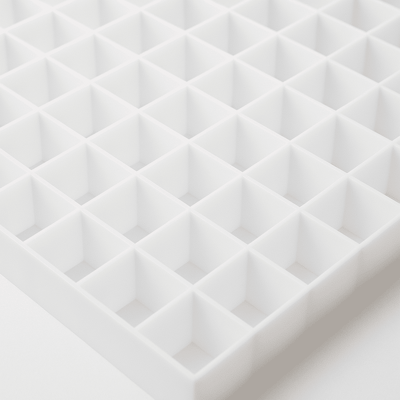
Egg crate
Egg crate diffuser is a lightweight styrene grid of small square cells, around 16 mm across. It is not a solid panel, so it does not soften the light much; instead it cuts glare from low viewing angles and lets heat and air move freely. You will see it in shops, workshops and ceilings where the look of the grid is part of the design.
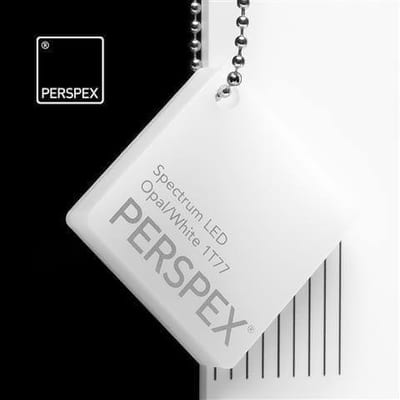
Opal
Opal acrylic is a solid milky white sheet that gives the softest, most even light, with no visible tubes or LED dots when the panel is far enough from the source. It suits kitchens, bathrooms, display light boxes and anywhere you want a clean, modern look. It passes less light than prismatic, so a dim fitting may look dimmer. Where the panel is at risk of knocks, for example in a garage or a school, opal polycarbonate is far tougher than acrylic.
Which one should you choose?
- Matching an existing office ceiling: prismatic, so the new panel looks like its neighbours.
- Soft, even light in a home, or hiding LED dots: opal.
- Low glare, open look, or a fitting that runs hot: egg crate.
- High-traffic or impact-prone area: opal polycarbonate.
How to measure an existing panel
The most reliable way to get a diffuser that drops straight in is to measure the old one, not the hole in the ceiling.
- Take the panel out and measure both edges to the millimetre. Old panels can be slightly out of square, so measure both diagonals too.
- Measure the thickness. Many troffer frames only take a panel up to around 3 mm, so a thicker sheet may not seat.
- If the panel is broken or missing, measure the inside of the frame lip and deduct 2 to 3 mm overall so the new panel drops in without forcing.
- Note any notches, clips or cut corners on the old panel. Send us a photo with a tape measure in shot if in doubt.
Why old diffusers go yellow
Many older diffusers were made from polystyrene, which yellows and turns brittle under years of heat and light from fluorescent tubes. Once a panel has yellowed it will not come clean, and it cuts the light output noticeably. If you are upgrading a fitting to LED, it is a good time to replace the diffusers too: the room looks brighter and the colour of the light looks right again. Acrylic opal and prismatic hold their colour far better over time.
Custom shapes and light boxes
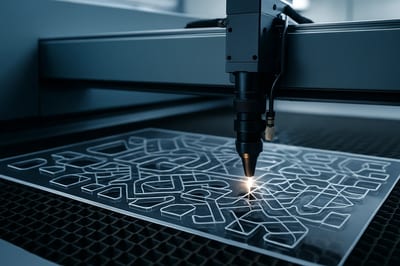
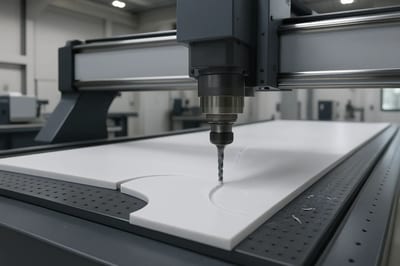
Not every diffuser is a rectangle. Round ceiling fittings, curved bulkheads and backlit signs often need circles or shaped panels. Opal acrylic cuts cleanly on our laser cutting machines with a polished edge, and polycarbonate and prismatic sheet are cut on our CNC router. Send a template or a drawing and we will cut to it.
Cut and finished in our own workshop
Plastic Online is the online counter for Holland Plastics, a fabrication workshop rather than a reseller. We do CNC routing, laser cutting, vacuum forming and plastic welding under one roof, so a batch of diffusers in one size or a single odd round panel is everyday work.
We cut to ±0.1 mm and will check critical sizes with you at quote stage, which matters when a panel has to sit in a tight frame. Orders ship Australia-wide from the capital-city depot closest to you, and there is no minimum order, so one replacement diffuser is fine. Head to our cut-to-size page to get started.
Featured Products
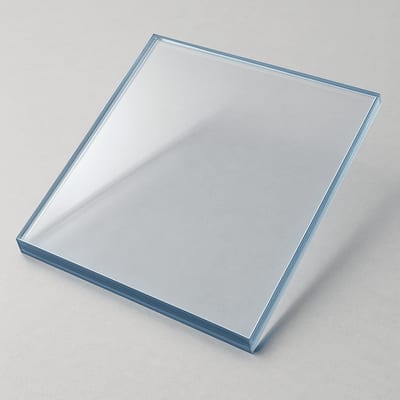
Products commonly used for this application.
Services Involved
Our services relevant to this use case.
Need help with your light diffuser panels cut to size project?
Our engineers provide expert guidance on material selection, design optimisation, and fabrication.
Light Diffuser Panels Cut to Size FAQ
Which way up does a prismatic diffuser go?
Can you match the size of my old diffuser?
Will opal hide the LED dots in my fitting?
Why has my old diffuser gone yellow?
Can you cut round diffusers?
More in Building, Construction & Infrastructure
Greenhouse Panels Cut to Size
Clear and opal solid polycarbonate and PETG greenhouse panels cut to size for small greenhouses, cold frames and seedling covers.
Read more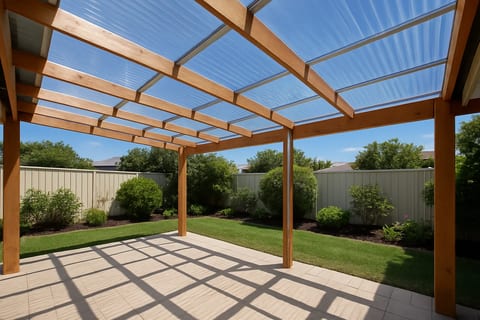
Polycarbonate Roofing Sheets Cut to Size
Flat, UV-resistant solid polycarbonate cut to size for pergola infills, awnings, roof light panels and broken panel replacements.
Read more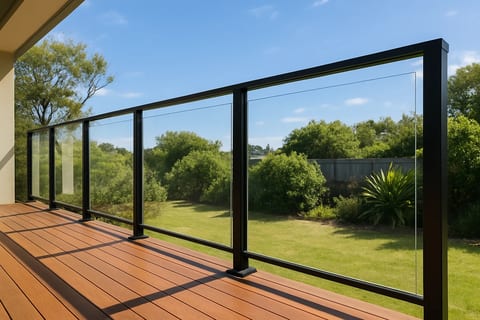
Acrylic Balustrades
Clear panel infills for stairs, balconies and voids — cut and polished to size, in acrylic or polycarbonate.
Read moreReady to start your light diffuser panels cut to size project?
Join thousands of businesses across Australia who trust Plastic Online for precision-cut industrial plastics.