


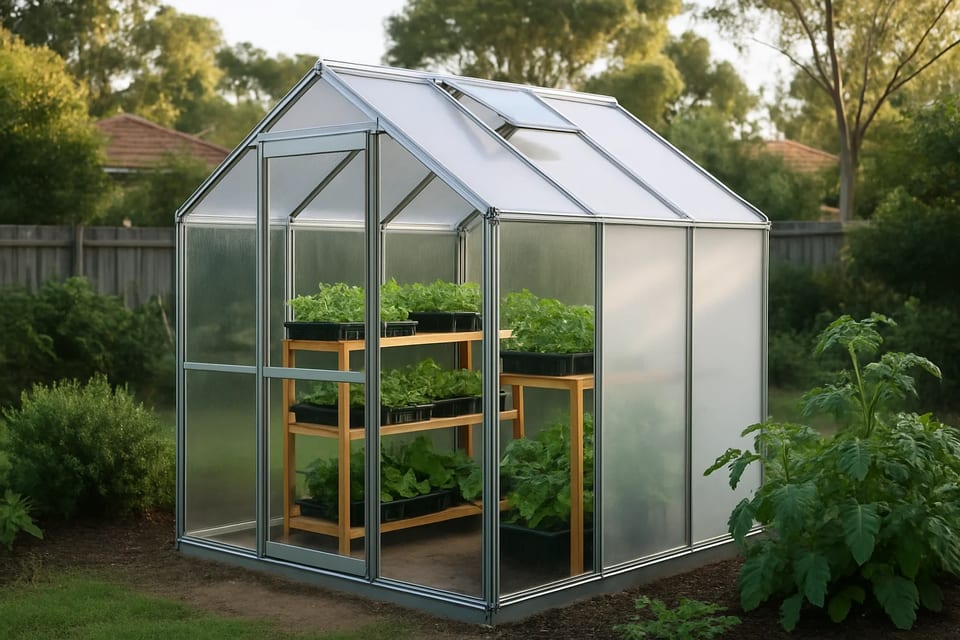
Greenhouse Panels Cut to Size
Clear and opal solid polycarbonate and PETG greenhouse panels cut to size for small greenhouses, cold frames and seedling covers.
4.8 / 5
Google Rating
24hr
Quote Turnaround
Australia Wide
Delivery
Start Your Project
Partner with Australia's leading acrylic fabrication experts. We provide end-to-end support from material selection to final delivery.
Material Consultation
Our engineers help you select the optimal grade for your specific environmental and aesthetic requirements.
CAD Support
Send us your designs in DXF, DWG, or PDF. We review every file for structural integrity and precision cutting paths.
Fast Quoting
Receive a comprehensive technical specification and competitive quote within 24 hours of your submission.
Small greenhouses, cold frames and seedling covers all live or die by their glazing. Panels crack in a hailstorm, go cloudy after years in the sun, or blow out of a kit frame in a strong wind. We cut flat solid polycarbonate and PETG panels to size for new builds and replacements, so you can glaze a backyard greenhouse without buying full sheets and cutting them on the lawn.
What we cut greenhouse panels from
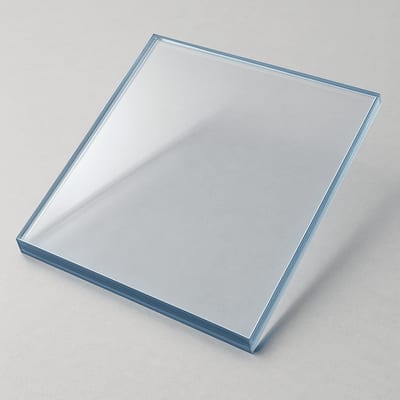
Our main greenhouse material is UV resistant solid polycarbonate sheet , in clear from 1 mm to 8 mm and in opal. It is the toughest clear sheet we sell, it shrugs off hail and stray cricket balls, and the UV protected face keeps it from yellowing when it faces the sun.
For lighter-duty jobs, PETG sheet is a good alternative for cold frame lids, propagation boxes and indoor seedling covers. It is clear, tough, easy to drill and bends cold a little, but it does not carry the same UV protection as our roofing-grade polycarbonate, so we suggest it for covered or short-season use rather than a panel that sits in full sun for ten years.
A straight answer on twinwall
Many commercial greenhouses use twinwall or multiwall polycarbonate. The hollow cells trap air, so the house holds heat overnight much better than with solid sheet. We do not stock twinwall or multiwall. If you are building a heated greenhouse, or growing through a cold inland winter, twinwall from a greenhouse or roofing supplier is the better buy and we would rather tell you that up front.
Solid sheet still has real advantages. It is clearer, so you get a proper view in and out. It is far stronger against hail and impact for the same weight. It has no open cell ends to collect dirt, algae and insects, which is a constant chore with twinwall. And it fits the thin glazing channels on many kit greenhouses that were designed for glass. In most of coastal Australia, where the problem in summer is too much heat rather than too little, a solid panel is perfectly suitable.
Clear or opal light
Clear panels let through the most light and suit seedlings and winter growing. The trade-off is direct sun: on a hot day clear glazing can scorch leaves and push temperatures very high unless you add shade cloth and ventilation.
Opal polycarbonate diffuses the light, so it arrives from every direction instead of as hard beams. Plants get fewer hot spots and shadows, leaves are less likely to burn, and the house stays more even in temperature. Many growers use opal on the roof and clear on the walls, which gives soft overhead light with good visibility at eye level. In Queensland and northern NSW opal roof panels are well worth considering.
Measuring replacement panels
- Measure the old panel if you still have it, rather than the frame opening. Kit frames often hide part of the panel inside a channel.
- Measure the thickness with a vernier or ruler. Kit greenhouses commonly use 3 mm or 4 mm glazing channels, and a thicker sheet will not fit.
- Allow a small clearance, around 2 to 3 mm overall, so the panel can expand in summer without bowing out of the channel.
- Note any corner clips, vent openings or wire clip holes so we can match them.
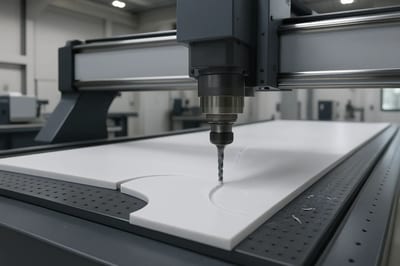
If your panels need vent cut-outs, rounded corners or fixing holes in exact positions, we can cut them on our CNC router from a sketch or drawing. That is usually easier and much tidier than drilling polycarbonate by hand in the garden.
Fitting tips
Fit polycarbonate with the UV protected face outwards, as marked on the film. Peel the film soon after fitting, because film left in the sun bakes on. Use oversized holes and sealing washers where you screw through the sheet, and do not clamp it tight; polycarbonate needs to move as it heats and cools. Clean panels with mild soapy water and a soft cloth, never with solvents or abrasive pads, which scratch and cloud the surface.
Cut and finished in our own workshop
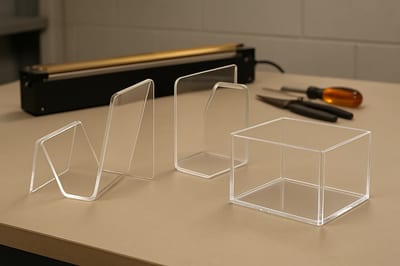
Plastic Online is where you order online from Holland Plastics, a plastics fabrication business with its own workshop. Panel cutting, CNC routing, laser cutting, vacuum forming and plastic welding all happen on one floor, so a set of matched greenhouse panels with vents and holes is routine work. Bigger or unusual builds can go through our plastic fabrication team.
Our cutting is accurate to ±0.1 mm, and we will confirm any critical measurement with you at quote stage. Panels ship Australia-wide from the capital-city depot nearest to you, and there is no minimum order, so a single cold frame lid is fine. Our cut-to-size page is the place to start.
Featured Products
Products commonly used for this application.

Services Involved
Our services relevant to this use case.
Need help with your greenhouse panels cut to size project?
Our engineers provide expert guidance on material selection, design optimisation, and fabrication.
Greenhouse Panels Cut to Size FAQ
Do you sell twinwall polycarbonate for greenhouses?
Is clear or opal better for a greenhouse?
What thickness are kit greenhouse panels?
Can I use PETG instead of polycarbonate?
More in Building, Construction & Infrastructure
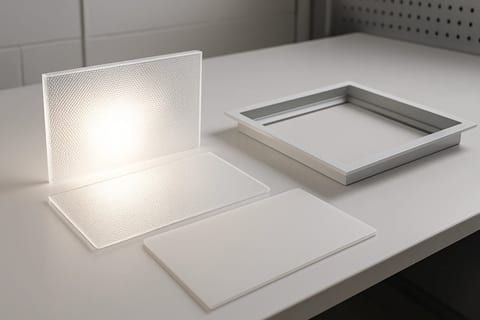
Light Diffuser Panels Cut to Size
Prismatic, egg crate and opal light diffuser panels cut to size to replace yellowed or broken diffusers in fluorescent and LED troffers.
Read more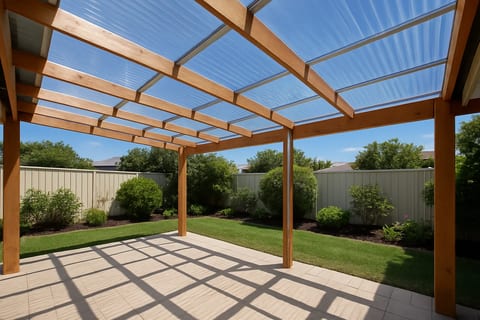
Polycarbonate Roofing Sheets Cut to Size
Flat, UV-resistant solid polycarbonate cut to size for pergola infills, awnings, roof light panels and broken panel replacements.
Read more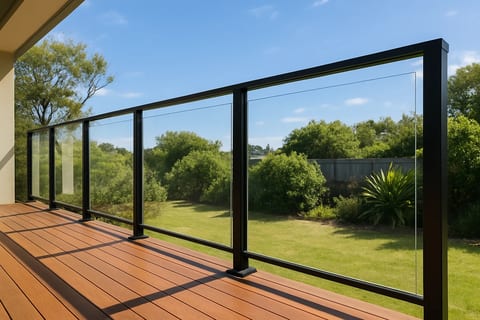
Acrylic Balustrades
Clear panel infills for stairs, balconies and voids — cut and polished to size, in acrylic or polycarbonate.
Read moreReady to start your greenhouse panels cut to size project?
Join thousands of businesses across Australia who trust Plastic Online for precision-cut industrial plastics.