


PTFE Sheet: Properties, Uses and How to Order Cut to Size
PTFE sheet explained: properties, virgin vs filled grades, common uses and how to order Teflon sheet cut to size online from Plastic Online, Australia-wide.
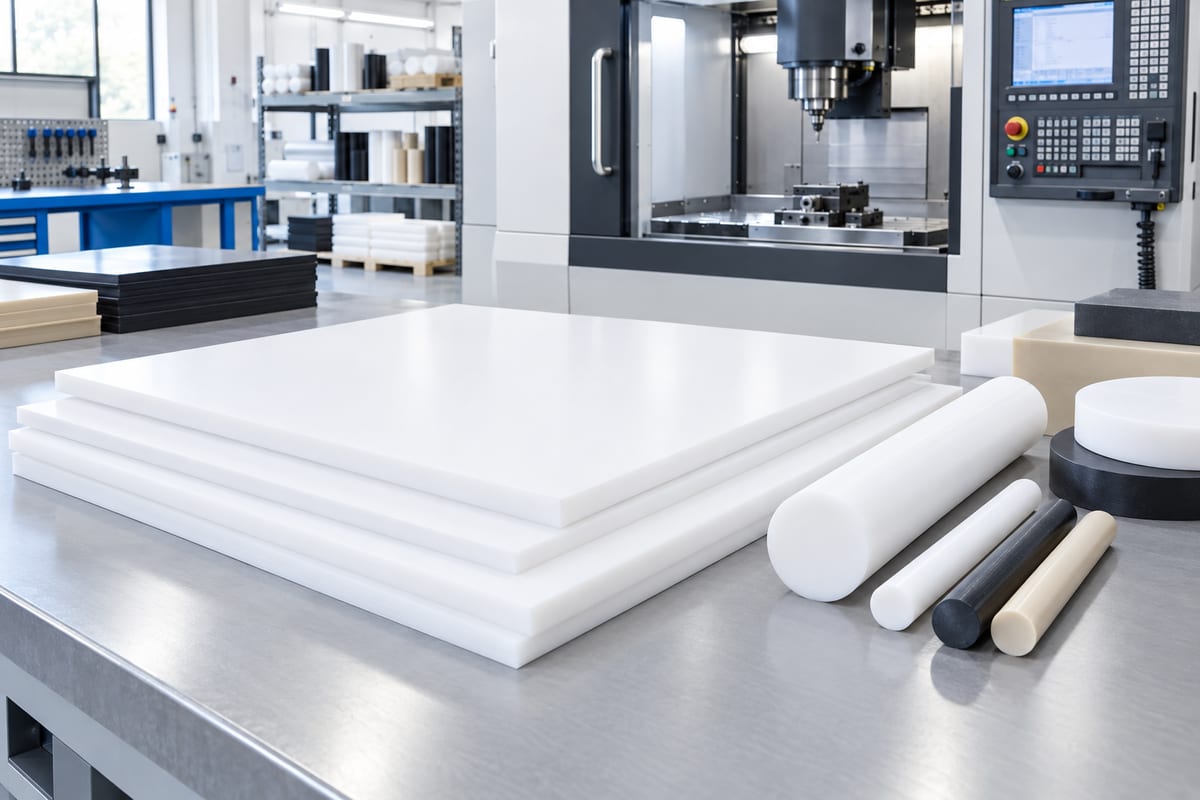
PTFE is the plastic people reach for when everything else sticks, melts, corrodes or wears out. A PTFE sheet gives you an extremely slippery, chemically inert and heat-tolerant surface that can be cut into gaskets, bearing pads, liners and wear strips. It is also a soft, expensive material with some quirks, so it pays to know what you are buying before you order. This guide covers what PTFE is, the grades and options, where it is used and how to get it cut to size.
What is PTFE (Teflon) sheet?
PTFE stands for polytetrafluoroethylene, a fluoropolymer best known under the brand name Teflon. Sheet is made by moulding or skiving the resin into flat stock. The result is a waxy, opaque white material with a set of properties few other plastics can match:
Very low friction: PTFE has one of the lowest coefficients of friction of any solid, which is why things slide off it. Chemical resistance: it is inert to nearly all acids, solvents and alkalis. Temperature range: it is commonly used in continuous service up to about 260°C and stays usable at cryogenic temperatures. Electrical insulation: it is an excellent insulator, even at high frequencies. Non-stick and weather stable: it does not absorb water and is not degraded by UV.
The trade-off is mechanical strength. PTFE is soft, and under sustained load it creeps (cold flows), meaning it slowly deforms. That matters for gaskets and bearing pads, and it is the main reason filled grades exist.
PTFE sheet options: virgin vs filled
Virgin PTFE
Virgin PTFE is made from 100% new resin with nothing added. It gives the best chemical resistance, the lowest friction and the cleanest surface, which is why it is the usual choice for food, pharmaceutical and laboratory work, and for electrical insulation. Plastic Online lists PTFE Virgin (Teflon) Sheet that you can price and order cut to size. Check the product page for the thicknesses and sheet sizes currently available.
Filled PTFE
Fillers such as glass fibre, carbon or bronze are blended into the resin to improve wear resistance, reduce creep and increase compressive strength. The cost is some loss of chemical purity and, with some fillers, electrical performance. Filled grades suit heavy-duty bearings and wear parts rather than food contact or high-purity applications. If you are not sure which grade fits your job, ask before you order. You can find the wider range under the Teflon PTFE shop category .
Where PTFE sheet is used
Because PTFE solves problems that other plastics cannot, you will find it across a wide range of industries:
Gaskets and seals: cut from sheet to suit flanges handling aggressive chemicals or hot fluids. Bearing and slide pads: low-friction surfaces for structures, machinery and conveyors. Chemical processing: liners, spacers and wear plates in tanks and pipework. Food processing: non-stick guides, chutes and separators. Electrical: insulating spacers, plates and barriers. Heat sealing and pressing: release surfaces on sealing bars and presses.
Is PTFE the right material? Alternatives to consider
PTFE is not cheap, and for many sliding or wear jobs you do not need its heat or chemical performance. If your application runs at moderate temperatures, UHMWPE sheet is a tough, abrasion-resistant, low-friction alternative that often costs less and handles impact better. PTFE earns its place when temperature, chemical attack or very low friction is the deciding factor. If you are weighing up several materials, the material selection guide is a good place to compare them.
Working with PTFE: practical tips
PTFE behaves differently from the acrylics and polycarbonates most fabricators are used to. A few points to keep in mind:
Cut it mechanically. Use sharp tooling and light clamping pressure, since the material is soft and deforms easily. Avoid laser cutting PTFE, because heating it generates harmful fumes. Allow for movement. PTFE expands noticeably with temperature and has a transition near room temperature that slightly changes its dimensions, so measure tight-tolerance parts at a consistent temperature. Plan your fixing. It will not bond with normal glues and cannot be welded like other thermoplastics, so design for clamping, recessing or bolting. Design for creep. Where a part carries constant load, consider a filled grade or a thicker section.
For complex shapes, holes and profiles, our CNC router services can produce parts from plastic sheet to your drawings.
How to order PTFE sheet from Plastic Online
Ordering is straightforward. Open the PTFE Virgin (Teflon) Sheet page, choose your thickness, enter the dimensions you need and see the price straight away. You can also use the pricing calculator to check costs before you commit. Before you order, confirm the operating temperature, the chemicals involved and whether the part carries load, as these decide whether virgin PTFE is the right grade. Orders are delivered Australia-wide. If you have a question about grades, tolerances or a custom part, contact the team and we will point you in the right direction.
Need PTFE sheet cut to your exact size? Get an instant cut-to-size price from Plastic Online using our online cutting tool and have it delivered Australia-wide.