


Clear Plastic Tube: Acrylic Options, Uses and How to Order
Clear plastic tube explained: extruded vs cast acrylic, metric and imperial sizes, common uses, and how to order clear acrylic tube from Plastic Online.
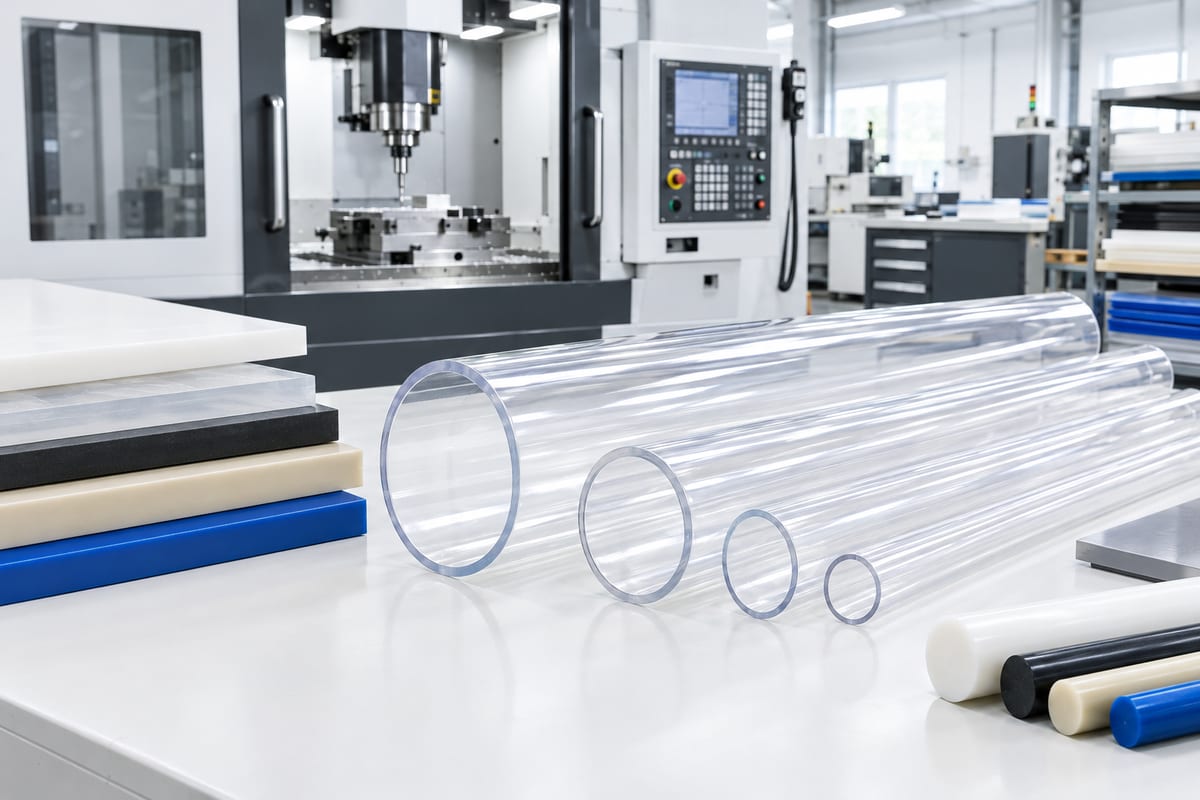
A clear plastic tube looks simple, but the material, wall thickness and manufacturing method all affect how it performs. Choose well and you get a crystal-clear, stable tube that machines cleanly. Choose poorly and you can end up with hazy edges, cracked ends or a tube that fails when it meets the wrong cleaner. This guide covers the main options, where each one is used and how to order from Plastic Online.
What is a clear plastic tube?
When most people search for a clear plastic tube, they want a rigid, transparent round tube that behaves a lot like glass without the weight or fragility. In almost every case that means acrylic (PMMA). Acrylic has excellent light transmission, a bright glossy finish and good weather resistance, and it is easy to cut, drill, polish and bond.
Other clear tubes exist, such as flexible PVC hose and polycarbonate tube, but they are different products with different strengths. Rigid acrylic is what you want for display work, lighting, sight tubes and presentation pieces. You can browse the full plastic tubes category to see what is currently available.
Clear tube options: extruded, cast and imperial
Extruded clear acrylic tube
Extruded tube is pushed through a die, which makes it consistent and economical. It suits general fabrication, displays, covers and light diffusers where you need a clean, clear tube at a sensible cost. Our standard acrylic clear tubes are the starting point for most everyday jobs.
Cast clear acrylic tube
Cast tube is produced in a mould and is generally the pick when finish matters. It machines and polishes cleanly, which makes it a favourite for premium display work, lighting pieces and anything where the cut ends will be seen. If you plan to flame polish, turn or machine the tube, look at our acrylic cast clear tube .
Imperial-sized clear tube
Plenty of existing equipment, fittings and replacement parts are still built to inch dimensions. If you are matching an older machine, a fitting or an existing assembly, the acrylic clear tube in imperial sizes saves you from fiddly adaptors or ill-fitting metric substitutes.
Working with curved profiles more broadly? Our acrylic clear half round is a handy companion for edge trims, caps and decorative detailing.
Where clear plastic tube is used
Clear acrylic tube turns up across trade, retail and hobby work. Common applications include:
Retail and exhibition displays: product stands, brochure holders, cylinder cases and point-of-sale pieces.
Lighting: diffusers, LED covers and feature light tubes where you want the light to show through cleanly.
Sight tubes and fluid visualisation: level indicators and low-pressure demonstrations where you need to see what is happening inside.
Aquariums, terrariums and hydroponics: housings, risers, sleeves and viewing sections.
Model making, architecture and craft: columns, vessels and decorative elements that need a glass-like look.
Machine guards and covers: transparent housings that let operators see inside. Where impact is a real risk, consider polycarbonate instead and check our polycarbonate range .
Choosing the right clear tube
Before you order, work through these questions:
Outside diameter, wall thickness and length. Measure the part it needs to fit or surround. Thicker walls give more rigidity and a better surface for machining or polishing.
Finish quality. If the cut ends or the full length of the tube will be on show, cast acrylic is usually worth considering. For hidden or functional applications, extruded is typically enough.
Environment. Acrylic handles outdoor UV well, but it is attacked by many solvents, alcohols and some cleaning sprays. Stick to mild soapy water and a soft microfibre cloth.
Impact and pressure. Acrylic is rigid but can crack under sharp impact, and it is not a rated pressure pipe. For anything beyond gravity-fed or low-pressure use, talk to us before you buy.
Fabrication plans. Acrylic tube bonds well with solvent cement, and edges can be sanded and flame polished. If you need slots, holes, end caps or custom components made for you, our plastic fabrication service can take care of it.
Tips for cutting and finishing clear tube
Clear tube shows every flaw, so the prep matters. Support the tube along its length when cutting, use a fine-tooth blade or a purpose-made tube cutter, and keep the cut square. Deburr the inside and outside edges straight away. For a polished look, wet sand through progressively finer grits and finish with a plastic polish or a careful flame pass. Leave the protective film on for as long as possible, and let cemented joints cure fully before putting them under load.
How to order clear plastic tube from Plastic Online
Start with the product page that matches your job: standard clear acrylic tubes , cast tube, or imperial sizes. Pick your diameter and wall thickness, confirm the length you need and place your order online. We deliver Australia-wide from our Gold Coast base, to trade and DIY customers alike.
If you are not sure whether extruded or cast is the better fit, need a size that is not listed or want advice on pressure, chemicals or finishing, contact us and describe the application. A quick conversation up front is cheaper than reordering a tube that was wrong for the job.
Need clear tube, sheet or custom-cut parts? Get an instant cut-to-size price with the Plastic Online pricing calculator and have your order delivered Australia-wide.